Article
PH Control Strategies in QB Control
By QB Systems
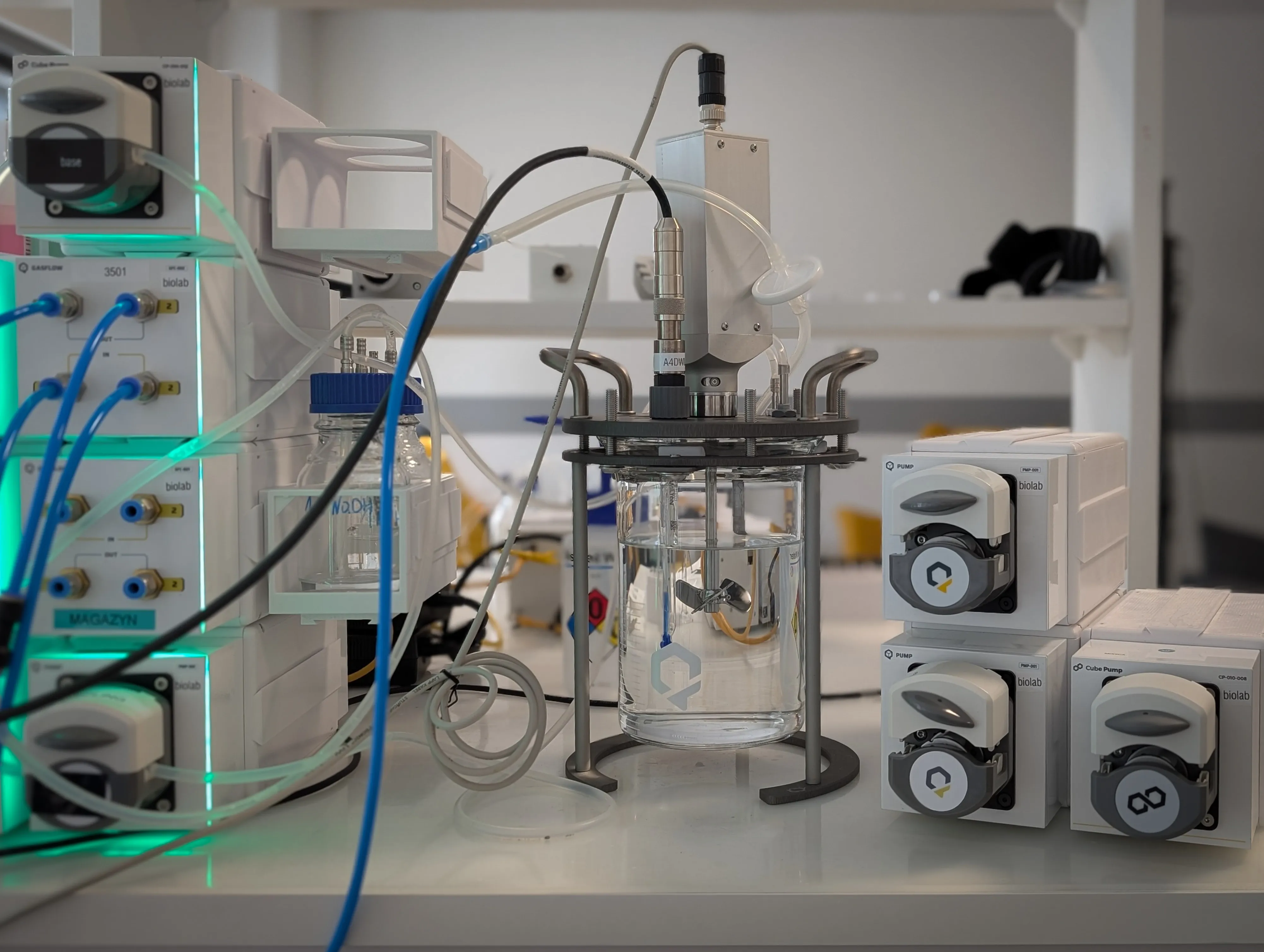
A comparative analysis of five automated pH control services — from simple pulse dosing to advanced PID regulation with time-based profiles. A practical guide for selecting the right strategy for your bioprocess.
Maintaining precise pH control is fundamental to successful bioprocess outcomes. Whether culturing mammalian cells at pH 7.2 or running microbial fermentations at pH 6.5, the control strategy you choose directly impacts product yield, cell viability, and process reproducibility.
QB Control offers five distinct pH control services , each designed for different hardware configurations, process requirements, and levels of control sophistication. They range from straightforward single-pump pulse dosing to advanced PID-regulated flow modulation with time-based pH profiles. All five share the QB Control platform, support 21 CFR Part 11 audit trails, and operate through a common state machine architecture following ISA-88 best practices — meaning operators who learn one service can quickly adopt any of the others.
This guide provides a detailed technical comparison, analyzes pros and cons, identifies ideal use cases, and offers practical guidance for selecting the right strategy.
Each service is analyzed for its control mechanism, hardware needs, strengths, limitations, and ideal application scenarios.
The simplest pH control service. Uses a single peristaltic pump delivering either base or acid (selected via Fluid Type before start). Operates in a loop: measure → compare to setpoint → dose a fixed volume at configured flow rate if out of tolerance → wait → repeat. Dosing stops early if pH re-enters the tolerance band.
The PID-based counterpart to the single-pump pulse service. Runs a continuous PID loop that modulates pump flow rate in real time. Delivers smoother, more responsive corrections without discrete step behavior. All PID parameters and process inputs are editable while the service is running.
Extends the single-pump pulse dosing model to two pumps — one for base and one for acid. Corrects pH deviations in both directions within the same run. Base and acid have independent amount and flow rate settings.
Uses a base pump to raise pH and a CO2 sparger to lower pH. Designed for setups where CO2 is already available and a liquid acid line is not desired. CO2 delivery is controlled by flow time and flow rate. Includes ramp rate monitoring as an extra safety layer.
The most advanced pH control service. Combines PID regulation with PWM pump control (fixed 10 s period) and supports time-based pH profiles with up to 20 setpoint-time pairs. PID output sign determines pump selection: positive → base, negative → acid.